Life near Lake Michigan gets a little louder in the summer. Between tourist traffic, lake activity, and birdsongs echoing through the woods, it’s easy to miss the noises we should be listening for. So, on those quiet evenings, when the hustle and bustle of the day has passed, the wind has calmed, and the house sits still, if you hear a slow creak, pay attention. That quiet creak, loud pop, or subtle groan might be your roof speaking, and it could be warning you of trouble.
While some roof noises are completely normal and benign, others may signal an underlying issue that shouldn’t be ignored. In Northern Michigan, where seasonal weather can take a toll on our roofs, understanding the sounds coming from above can help prevent damage to our homes. This article will help you better understand the common and not-so-common noises your roof might make, what they could mean, and how to determine whether it’s time to hire a residential roofer to take a closer look. By listening to your roof when it speaks, you can help protect your home from costly repairs and keep it strong through every season. Let’s get started.
Why Paying Attention to Roof Noise Matters
Here in Traverse City, where summer storms and lake-effect snow can test our homes, the sounds coming from your roof are more than background noise; they’re clues to its overall health. Quiet creaking and alarming bangs, these noises may signal anything from normal weather responses, such as contraction from temperature changes, to a serious problem that demands immediate attention. Ignoring a small problem can eventually turn into a costly repair.
Roof noises can reveal immediate concerns, like leaks from damaged shingles, or long-term issues like structural problems from heavy loads of snow. With our climate and the common freeze and thaw cycles of winter, detecting problems early is the key to preventing a small problem from snowballing into something much larger (and costly). A small drip can turn into a major leak, leading to water damage, mold growth, or weakened rafters. Unaddressed issues may even lead to energy loss from gaps, or worse, safety hazards like roof collapse under the weight of next winter’s snow. By paying attention to the noises overhead and taking quick action, you can prevent damage and avoid expensive repairs. Living in an area like ours where the weather can be tough on our homes, it’s not just smart to listen, it’s essential.
How to Tune In: Investigating What You Hear
Not all noises coming from your roof mean trouble. Just because you notice a strange sound doesn’t always mean your roof is sick; it could just be groaning about the weather. Whatever you hear coming from your roof, use these tips to investigate the source and determine if trouble is ahead.
- Document the noise you hear, what it sounds like, the timing, how often it’s happening, and the weather conditions when it occurs.
- Perform a visual inspection from the ground and also from your attic. Look for missing shingles, gaps, water staining, or anything else that seems abnormal. Check the attic for signs of pest infestation.
- Remember to use safety precautions when inspecting the roof. Never climb onto the roof during dangerous weather conditions to avoid falls. If safety is a concern, have a residential roofer in Traverse City perform the routine inspection for you.
- Keep an ear out for additional noises. Make sure to listen in all weather conditions and note any differences or similarities. Actively monitor any noise that you hear and record it in a notebook or note-taking app designated specifically for this purpose. If you need a professional roofer, these notes can benefit them too.
By keeping detailed records of noises and the specific information about when they happen, you can more easily determine whether they are normal or something more serious. The records you keep, along with visual inspections, can help you diagnose and repair any issues promptly. To help you decide if what you are hearing is normal, let’s look at the most common roof noises that are considered harmless.
Normal Roof Noises
Many roof noises we hear are perfectly normal and can be attributed to weather and temperature changes. Knowing the sounds you are hearing are from normal occurrences can save you a lot of worry.
- Temperature Changes: During warm days and cold nights, roofing materials can expand or contract with the temperature changes and create sounds such as popping or creaking. These sounds can occur with metal, wood, and asphalt materials and are usually harmless unless they are paired with other signs or are unusually frequent.
- Wind Sounds: Another common source of roof noise is wind. Strong winds, especially, can create whistling noises throughout the home when passing over vents, chimneys, or shingles. If there are gaps in the roof that allow the air to pass more freely, these sounds may be increased. Wind noises may be increased if the roof has a large surface area or the home is located in an area with frequent winds. And while wind noise is common, it is important to have regular roof inspections to identify loose parts and prevent damage.
- Settling: More common in newer homes, settling can cause slow groans and quiet creaking. These small shifts in a home’s structure over time can produce these quiet sounds of settling as the home adjusts to being built or any recent renovations.
When you understand that those creaks, groans, and whistles are caused by weather changes and settling, your mind is also settled, and you can rest easy. These noises, driven by weather, are usually harmless when your roof is well-maintained and in good condition.
And while these familiar noises are typically not cause for concern, not all sounds you hear are innocent. Let’s learn about the concerning sounds that could signal serious problems if left unchecked.
Concerning Roof Noises: Signs of Trouble
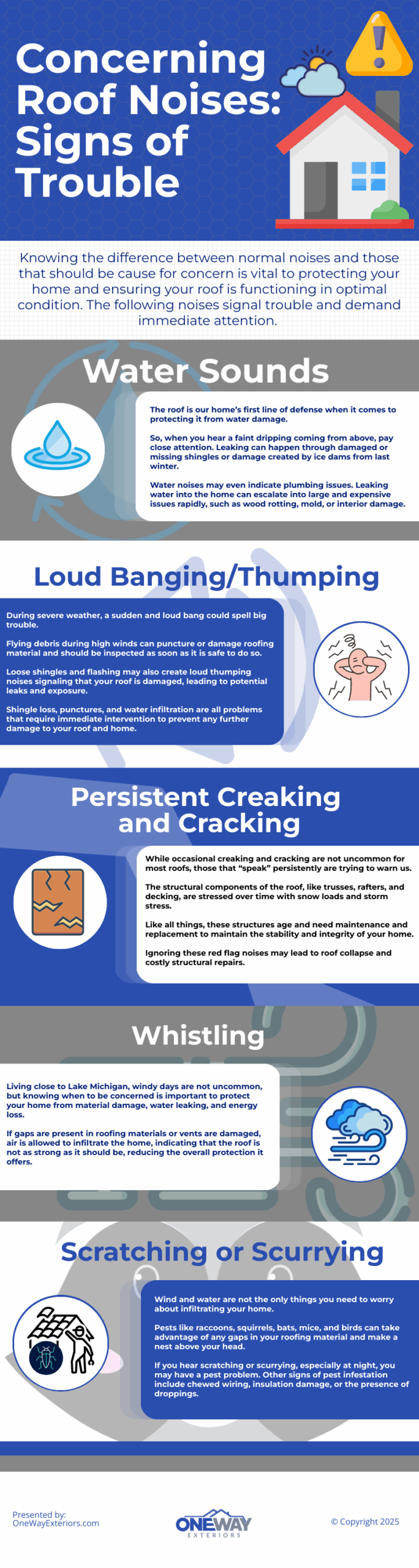
Knowing the difference between normal noises and those that should be cause for concern is vital to protecting your home and ensuring your roof is functioning in optimal condition. The following noises signal trouble and demand immediate attention.
- Water Sounds: The roof is our home’s first line of defense when it comes to protecting it from water damage. So, when you hear a faint dripping coming from above, pay close attention. Leaking can happen through damaged or missing shingles or damage created by ice dams from last winter. Water noises may even indicate plumbing issues. Leaking water into the home can escalate into large and expensive issues rapidly, such as wood rotting, mold, or interior damage.
- Loud Banging/Thumping: During severe weather, a sudden and loud bang could spell big trouble. Flying debris during high winds can puncture or damage roofing material and should be inspected as soon as it is safe to do so. Loose shingles and flashing may also create loud thumping noises signaling that your roof is damaged, leading to potential leaks and exposure. Shingle loss, punctures, and water infiltration are all problems that require immediate intervention to prevent any further damage to your roof and home.
- Persistent Creaking and Cracking: While occasional creaking and cracking are not uncommon for most roofs, those that “speak” persistently are trying to warn us. The structural components of the roof, like trusses, rafters, and decking, are stressed over time with snow loads and storm stress. Like all things, these structures age and need maintenance and replacement to maintain the stability and integrity of your home. Ignoring these red flag noises may lead to roof collapse and costly structural repairs.
- Whistling: Living close to Lake Michigan, windy days are not uncommon, but knowing when to be concerned is important to protect your home from material damage, water leaking, and energy loss. If gaps are present in roofing materials or vents are damaged, air is allowed to infiltrate the home, indicating that the roof is not as strong as it should be, reducing the overall protection it offers.
- Scratching or Scurrying: Wind and water are not the only things you need to worry about infiltrating your home. Pests like raccoons, squirrels, bats, mice, and birds can take advantage of any gaps in your roofing material and make a nest above your head. If you hear scratching or scurrying, especially at night, you may have a pest problem. Other signs of pest infestation include chewed wiring, insulation damage, or the presence of droppings.
From dripping water to tireless creaking, these concerning noises are your home’s way of telling you the roof needs help. If left unchecked, these noises can lead to water damage, structural damage, failure, or pest infestations. Now that you know what these noises can mean, it’s time to learn what to do to keep your roof in tip-top shape.
Taking Action to Protect Your Home
Like we learned earlier, taking immediate action and investigating what you are hearing is the first step in maintaining the integrity of your roof and preventing damage. Recording noises and documenting the frequency and weather conditions helps you determine where the sound is originating from and if it’s normal or not. Once you’ve decided there is a potential problem, a visual inspection must take place. If you are unable to safely inspect your roof and attic, or you are unsuccessful in finding the source of the noise, you may want to consider hiring a residential roofer in Traverse City who is licensed and familiar with Northern Michigan’s climate. By having a professional inspection and scheduling regular maintenance, you can address issues while they are small and protect your home from future storms. Taking quick action when you hear a concerning noise helps to ensure your roof protects your home no matter the weather. With these helpful steps in mind, let’s wrap up by reviewing why listening when your roof speaks helps prevent minor issues from turning into major problems.
Sound Advice: Listen for Trouble
In Michigan, your roof is more than just a layer of protection; it’s a system that can speak and give clues when something’s wrong. From harmless cracks caused by temperature changes to the alarming sounds of water dripping, understanding these noises can save you from big problems and costly repairs. Normal noises like wind whistling over shingles or creaking from settling are not a cause for worry when your roof is well-maintained. However, noises like water running, persistent popping, or scurrying pests demand quick action. By keeping track of noises, safely inspecting your home, and hiring a licensed roofer, you can address problems early and keep your roof strong for years to come. Don’t let the Michigan weather drown out your roof’s warnings; listen closely, act promptly, and protect your peace of mind.
Infographic