When a wild summer storm rolls through Michigan, leaving branches scattered and gutters dangling or dented, homeowners find themselves asking the same question: Will my homeowner’s insurance cover the damage? The answer to this question isn’t always as straightforward as we might imagine it to be. While homeowners’ insurance does provide coverage for gutters in certain situations, it does not apply 100% of the time.
Understanding when your gutters are protected (and when they’re not) can help you avoid an expensive surprise. In this guide, we’ll look at how homeowners’ insurance typically handles gutter damage, explore the common situations where coverage applies, common reasons for claim denials, and scenarios that may leave you footing the bill. Plus, you’ll learn what you can do to keep your coverage intact and stay protected. If you are a homeowner dealing with storm-related gutter damage or you’re simply planning ahead, here is what you need to know about gutters and homeowners’ insurance.
How Homeowners’ Insurance Generally Handles Gutter Damage
According to most homeowner insurance policies, a home’s gutter system is considered part of the dwelling structure and is thereby covered under the policy. However, there are exceptions under certain conditions, and it is up to the homeowner to understand the details of their policy. Claim approval is based on both the policy and the cause of the damage sustained.
Generally speaking, insurance policies will cover sudden damage that is caused unexpectedly by perils such as fires and storms. Preventable issues and those caused by wear and tear are not covered by the policy.
As a responsible homeowner, one must take the time to familiarize oneself with their policy details to understand the specific coverage for their gutters, or they can call their insurance agent to clarify any questions to avoid any surprises when filing a claim. With this in mind, let’s look at situations where gutter damage is typically covered by homeowner’s insurance.
Situations Where Gutter Damage Is Usually Covered
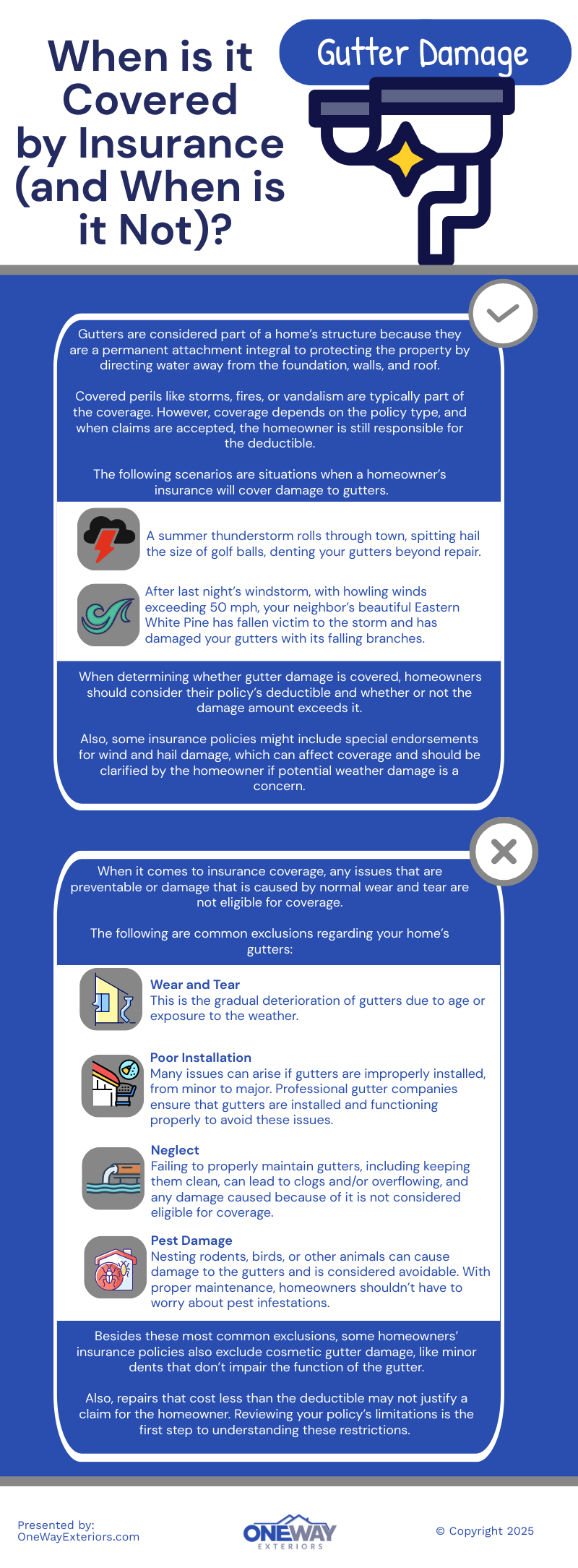
Gutters are considered part of a home’s structure because they are a permanent attachment integral to protecting the property by directing water away from the foundation, walls, and roof. Covered perils like storms, fires, or vandalism are typically part of the coverage. However, coverage depends on the policy type, and when claims are accepted, the homeowner is still responsible for the deductible. The following scenarios are situations when a homeowner’s insurance will cover damage to gutters.
- A summer thunderstorm rolls through town, spitting hail the size of golf balls, denting your gutters beyond repair.
- After last night’s windstorm, with howling winds exceeding 50 mph, your neighbor’s beautiful Eastern White Pine has fallen victim to the storm and has damaged your gutters with its falling branches.
When determining whether gutter damage is covered, homeowners should consider their policy’s deductible and whether or not the damage amount exceeds it. Also, some insurance policies might include special endorsements for wind and hail damage, which can affect coverage and should be clarified by the homeowner if potential weather damage is a concern. But what about the situations where gutter damage is not covered by insurance? Let’s take a look at some of the most common.
Situations Where Gutter Damage Is Not Covered
When it comes to insurance coverage, any issues that are preventable or damage that is caused by normal wear and tear are not eligible for coverage. The following are common exclusions regarding your home’s gutters:
Wear and Tear: This is the gradual deterioration of gutters due to age or exposure to the weather.
Poor Installation: Many issues can arise if gutters are improperly installed, from minor to major. Professional gutter companies ensure that gutters are installed and functioning properly to avoid these issues.
Neglect: Failing to properly maintain gutters, including keeping them clean, can lead to clogs and/or overflowing, and any damage caused because of it is not considered eligible for coverage.
Pest Damage: Nesting rodents, birds, or other animals can cause damage to the gutters and is considered avoidable. With proper maintenance, homeowners shouldn’t have to worry about pest infestations.
Besides these most common exclusions, some homeowners’ insurance policies also exclude cosmetic gutter damage, like minor dents that don’t impair the function of the gutter. Also, repairs that cost less than the deductible may not justify a claim for the homeowner. Reviewing your policy’s limitations is the first step to understanding these restrictions.
Now that we’ve seen what the most common exclusions are, let’s take a look at the most common reasons for an insurance claim denial.
Most Common Reasons for Denied Gutter Claims
Even when gutter damage seems eligible for coverage, insurance claims can still be denied for a variety of reasons. Understanding the most common causes of denial can help homeowners avoid surprises and better protect their home and their pockets. Let’s take a look.
Missed Maintenance: Insurance companies can deny claims if it is apparent that a homeowner has failed to clean or inspect their gutters regularly, leading to preventable damage.
Unsecured Gutters: If damage has been caused due to your gutters being loose or unsecured to the home, most likely the claim will be denied.
Long-Term Damage: Obvious signs of long-term damage, like rust, that cause damage due to not addressing issues in sufficient time.
Delayed Reporting: Not reporting damage as soon as it occurs may lead to additional damage. Even if this is not the case, not reporting the claim can be the reason for denial.
Improper Documentation: Failing to provide photos, receipts, or proof of damage may lead to claim denials.
Many homeowners rely on seasonal inspections to prevent issues, and experienced gutter companies in Traverse City and other areas can help identify early signs of damage that might otherwise lead to extensive damage and denied claims. Below are tips that homeowners can use to help keep their gutters covered.
How to Maintain Insurance Coverage on Your Gutters
Although every homeowner’s insurance policy is different and coverage can vary, there are proactive steps that you can take to help maintain your eligibility for gutter-related claims.
- Keep your gutter clean and free of debris. It is recommended that you clean your gutters at least two times a year (spring and fall).
- Regularly inspect the gutters for signs of damage, such as sagging, leaks, rust, or detachment. Inspecting for damage is especially important after severe storms.
- Repair any minor issues immediately to prevent worsening.
- Hire a licensed professional for repairs and replacements, ensuring proper installation.
- Save all invoices and service records for proof of proper maintenance.
- Consider installing gutter guards to help prevent debris buildup that can cause issues like premature wear and tear and pest infestation.
Taking these preventative measures not only helps to preserve the condition of your gutters, but it also supports your ability to file a successful claim if the need arises.
Stay Prepared, Stay Protected
When it comes to gutter damage and your homeowner’s insurance policy, knowledge is your best protection. Understanding whether your policy covers gutter damage gives you the power to make an informed decision and avoid unexpected repair costs. By familiarizing yourself with your policy’s covered perils, maintaining your gutters through regular cleaning and inspections, and promptly addressing damage, you can increase your chances of a successful claim while keeping your home protected from water-related issues. Take action today and review your policy, schedule a gutter inspection, and document your maintenance efforts to make sure your gutters remain a functional and insurable part of your home.
Infographic